CRM > About us > International Scientific Advisory Committee
International Scientific Advisory Committee [ français ]
(see detailed menu on the right)
The International Scientific Advisory Committee advises the CRM on all scientific orientations: selection, organisation and elaboration of the thematic programs (annual programs, semestral programs and short programs), elaboration of the general and multidisciplinary programs and all other important activities.
The International Scientific Advisory Committee meets at the CRM at least once a year, and several times a year by electronic mail. Here is a list of its members:
Afonso S. Bandeira
ETH Zurich
Lia Bronsard
McMaster University
Ruth Charney
Brandeis University
Miranda Holmes-Cerfon
Courant Institute of Mathematical Sciences
Octav Cornea
Université de Montréal, CRM Director
Olivier Lafitte
Institut Galilée, Unité Mixte Internationale CNRS-CRM
Dusa McDuff
Columbia University, ISAC President
Javad Mashreghi
Université laval
Sylvie Méléard
École Polytechnique
Robert Pego
Carnegie Mellon University
Jeremy Quastel
University of Toronto
Dana Randall
Georgia Institute of Technology
Nicolai Reshetikhin
University of California, Berkeley
Emmanuel Ullmo
Institut des Hautes Études Scientifiques
Michael J. Ward
University of British Columbia
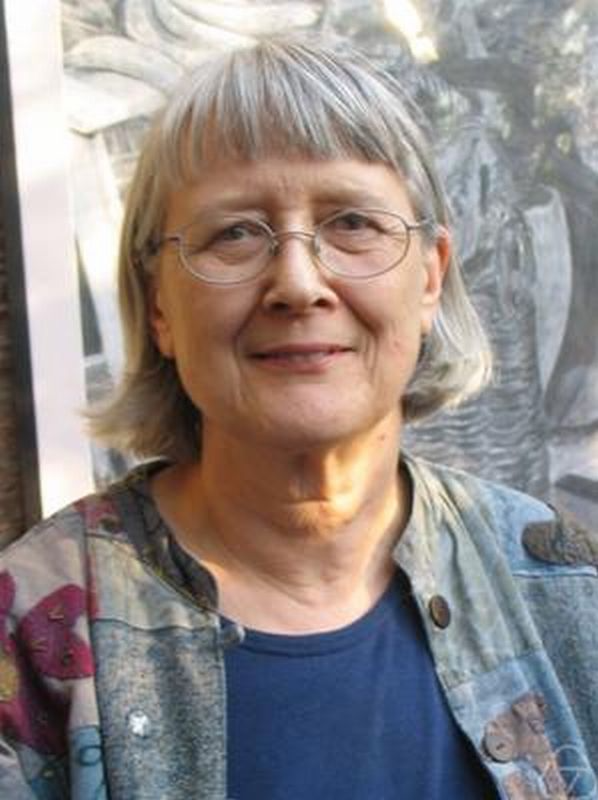
Dusa McDuff
Dusa McDuff is the Helen Lyttle Kimmel '42 professor of Mathematics at Barnard College at Columbia University in New York. She gained her early teaching experience at the
University of York, the University of Warwick and at MIT. In 1978, she joined the faculty of the department of Mathematics at SUNY Stony Brook, where she was awarded the title of
Distinguished Professor in 1988. Prof. McDuff has honorary doctorates from four universities (Edinburgh, York, Strasbourg and Pierre et Marie Curie). She is a fellow of the Royal
Society, the National Academy of Sciences, the American Philosophical Society and an honorary member of Girton College in Cambridge. She has received the Satter Prize from the
American Mathematical Society and the Outstanding Woman Scientist Award from the AWIS (Association for Women in Science). Ms. McDuff's service to the math community has been
extensive. She is particularly interested in issues connected with the position of women in mathematics, and currently serves on the MSRI Board of Trustees. Together with Dietmar
Salamon, she has written two fundamental books on symplectic topology as well as several articles in collaboration with François Lalonde. Dusa McDuff is a member of the CRM
International Scientific Committee (since 2013) and has been the Chair since January 2020.
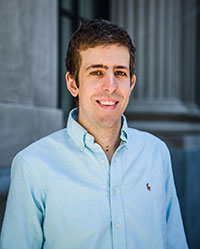
Afonso S. Bandeira
Formerly an assistant professor of Mathematics and Data Science with the Courant Institute of Mathematical Sciences at NYU, Afonso S. Bandeira is since May 2019 a full professor of Mathematics at ETH Zurich. He holds a BS and MS in Mathematics from University of Coimbra (Portugal), and did his PhD at the Program of Applied and Computational Mathematics at Princeton University. He joined NYU after a year as an instructor at the department of Mathematics at MIT.
Afonso's interests are in Mathematics of Data Science, broadly defined. These include connections with Probability, Computer Science, Statistics, Machine Learning, Discrete Math, Image/Signal Processing, and Physics.
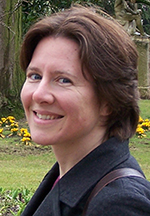
Lia Bronsard is one of Canada's leading mathematical analysts, whose interests lie in the field of partial differential equations and the calculus of variations. She specializes in the study of singular limits of solutions of partial differential equations. Her research brings rigorous methods of analysis to bear on problems arising in the physical sciences, and in particular those involving singular geometrical structures such as vortices, phase transition layers, and grain boundaries.
Bronsard was born in Québec in 1963 and received her Baccalauréat ès sciences in mathematics from the Université de Montréal in 1983. She received her Ph.D. in 1988 from the Courant Institute of Mathematical Sciences at New York University, working with R. V. Kohn on the De Giorgi conjecture connecting singularly perturbed reaction-diffusion equations and mean curvature flow. After her degree, she held positions at Brown University, the Institute for Advanced Study, and the Center for Nonlinear Analysis at Carnegie Mellon University. In 1992, she moved to McMaster University, where she is now a Professor of Mathematics.
During the period after her thesis, Bronsard worked on energy driven pattern formation in collaboration with B. Stoth and others. Her paper with F. Reitich on the structure of triple-junction layers in grain boundaries, from her period at CMU, was the first mathematical analysis of these multiphase singular structures and has been highly influential.
In her current research, Bronsard studies the detailed structures of vortices in the phenomenon of Bose-Einstein condensation and in the Ginzburg-Landau models of superconductivity. In this area, her work, in collaboration with S. Alama, T. Giorgi, P. Mironescu, E. Sandier and colleague J. Berlinsky from Physics at McMaster University, sets a very high standard of quality, and is a model of interdisciplinary research.
She is president of the Canadian Mathematical Society for the 2014-2016 term.
Ruth Charney
Ruth Charney is a Professor of Mathematics at Brandeis University. She received her PhD from Princeton University in 1977 and held postdoctoral positions at UC Berkeley and
Yale University. She then spent nearly 20 years at the Ohio State University before returning to Brandeis, her undergraduate alma mater, in 2003.
Ms. Charney is interested in the interplay between topology and algebra. Her research spans several areas of mathematics, including K-theory, algebraic topology, and her
current area of interest, geometric group theory. Her recent work focuses on the geometry of metric spaces of non-positive curvature (CAT(0) spaces) and groups that act by isometries
on such spaces. She also enjoys giving public lectures that offer the general public insight into the beauty of abstract mathematics.
In Decembre 2019, the American Mathematical Society (AMS) announced the nomination of Ruth Charney as President Elect. She has also served as President of the Association for
Women in Mathematics (AWM), Vice-President of the AMS and Chair of the Board of Trustees of AMS. As well she was selected as a Polya Lecturer for the Mathematical Association of
America (MAA).
Miranda Holmes-Cerfon
Miranda Holmes-Cerfon received her BSc in 2005 in Honours Mathematics from the University of British Columbia, and her PhD in 2010 in Applied Mathematics and Atmosphere-Ocean Science from Courant Institute of Mathematical Sciences, New York University. Following that she was a Harvard Instructor in Applied Mathematics for 2 years, and then returned to New York as Courant Instructor and then Assistant professor of mathematics. She is broadly interested in problems in applied mathematics, and has contributed to understanding a range of systems from lava tubes to ocean waves to sphere packing. Her current research interest is in statistical mechanics at the nano- and microscale, with the aim of finding principles and building algorithms to design new materials. She is the recipient of a US Department of Energy Early Career Award, and a 2018 Alfred P Sloan Fellowship in Mathematics.
Octav Cornea
Professor in the Department of Mathematics and Statistics of the Université de Montréal since 2003, Octav Cornea, obtained his doctorate at the University of Rochester in 1993 and, in 1994, he became Professor at the University of Lille 1, where he remained until 2002. He was director of the Institut des sciences mathématiques (2006-2009), director of the Séminaire de Mathématiques Supérieures (2010-2019) and deputy director of the Centre de recherches mathématiques (2011-2014). He works in geometry and topology, with contributions to algebraic topology, dynamical systems and, over the last twenty years, mainly to symplectic topology. He was a Simons Fellow (2015-2016), member of the Institute for Advanced Study in Princeton (2015-2016), Research Professor at the Mathematical Science Research Institute at Berkeley (2009) and invited speaker at the Inaugural Mathematical Congress of the Americas in 2013
Olivier Lafitte
Olivier Lafitte is Director of the UMI-CRM. He is also professor at the Galilée Institute of Paris 13 University in Villetaneuse since 2001 and researcher at LAGA (Laboratory of Analysis, Geometry and Applications) (UMR 7539) as well as member of the Modeling and Scientific Computing team. He is also the Director of the graduate school (engineering education) in applied mathematics at Paris 13 University, MACS (Applied Mathematics and Scientific Computing) since 2003.
His areas of interest are varied, around partial differential equations and ordinary differential equations. Its applications range from electric and electro-magnetic wave diffraction to Schrödinger's spectral theory, hydrodynamic instabilities and their mathematical formulation, from multi-physical coupling problems for the existence and uniqueness of solutions, to modeling in biology and the use of PDEs in stochastic calculus for finance. He has been collaborating with Montréal colleagues for a long time and has signed an agreement in 2015 between the universities of Montréal and Paris 13 for the exchange of master's students in mathematical finance.
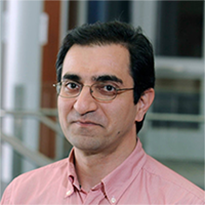
Javad Mashreghi
Javad Mashreghi is a faculty member at Laval University and the author of more than one hundred papers and eleven books and has edited nine proceedings. He received the CMS G. de B. Robinson Award for his exceptional publication at the Canadian Journal of Mathematics in 2004 and has published papers on a wide variety of subjects such as operator theory, function theory, complex analysis, matrix theory, functional analysis, potential theory, optimization, mathematical biology, electrical engineering and metallurgy.
Dr. Mashreghi was the chair of pure math section in the evaluation group of NSERC for the Discovery Grant in 2016, and was an NSF panelist in 2019. He has served in the Board of Directors of CRM, Scientific Advisory Panel of AARMS (two mandates) and in the Executive Committee of CMS as the Vice-President (Québec), and chaired the Publication Committee of CMS during the transition to the Cambridge University Press.
Dr. Mashreghi has been on the editorial boards of CJM, CMB, PAMS, and Concrete Operators. He is a member at large of the Publication Committee of AMS, and a member of the Mathematical Council of the Americas. He serves as president of the Canadian Mathematical Society from 2020 to 2022.
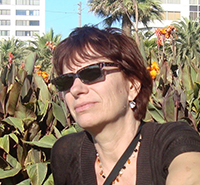
Sylvie Méléard
Sylvie Méléard was a student at the Ecole Normale Supérieure de Fontenay-aux-Roses (Sciences), graduated in mathematics and defended her thesis in 1984 under the direction of Nicole El Karoui at Université Paris VI. She became a professor at Université Paris X-Nanterre before teaching, as a professor of probability, at École Polytechnique starting in September 2006. She was president of the Department of Applied Mathematics from 2010 to 2014 and is responsible for the Population Evolution and Interacting Particle Systems (PEIPS) team. She is currently editor-in-chief of Stochastic Processes and their Applications.
She is Chevalier de la Légion d'honneur, obtained the La Recherche 2013 prize, was an Invited Speaker at 7ECM (2016) and was recently elected to the European Academy of Sciences (2018).
The first areas of interest of Sylvie Méléard focused on the probabilistic interpretation of nonlinear partial differential equations and stochastic particle models before moving towards random modeling in ecology / evolution with a particular interest for individual behaviors and their derivation under different parameter regimes. In this capacity, she is the holder of the Mathematical Modeling and Biodiversity Chair, created jointly by the École Polytechnique, the National Museum of Natural History and Veolia, which develops a multidisciplinary approach to ecosystem modeling, in order to respond to various questions. ranging from environmental issues (adaptive evolution, spatial colonization, analysis of community dynamics and construction of biodiversity scenarios) to medical issues (antibiotic resistance, invasion of cancer mutations).
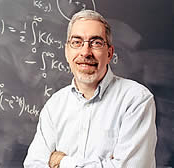
Robert Pego has been a professor at Carnegie Mellon since 2004. He received his A.B. in mathematics from the University of Chicago and obtained his Ph.D. in applied mathematics from the University of California at Berkeley. He was a postdoctoral research associate at the University of Wisconsin, and became assistant professor at the University of Michigan before being a professor at the University of Maryland for 14 years.
His research interest include dynamics in infinite-dimensional physical systems, universal scaling behavior in models of clustering and coarsening, stability of nonlinear waves, and numerical methods for incompressible viscous flow.
Jeremy Quastel is widely recognized as one of the top probabilists in the world, having made major advances in the fields of hydrodynamic theory, stochastic partial differential equations, and integrable probability. He is particularly recognized for a series of ground-breaking works during the last ten years related to the Kardar-Parisi-Zhang (KPZ) equation and the wider class of random growth models conjectured to share the same long-time, large-scale limit (the so-called KPZ universality class). He proved a 25 year old conjecture from physics about the scaling exponents for the KPZ equation, as well as computing an exact formula for its one-point distribution. He demonstrated that the KPZ equation is universal in that it arises as a scaling limit of a wide variety of non-linear stochastic partial differential equations of Hamilton-Jacobi type. Most recently, he constructed and computed transition probabilities for the 'KPZ fixed point' Markov process, which should be the universal long-time limit of all models in the KPZ universality class. Among his earlier contributions, Quastel derived the incompressible Navier-Stokes equation from a class of interacting particle systems, derived equations for the behaviour of the internal diffusion-limited-aggregation model, and proved a conjecture about the speed of the traveling front for the stochastic Fisher-Kolmogorov-Petrovsky-Piskunov equation, which models branching diffusion processes.
For the profound impact of his work, Quastel has been recognized as a Fellow of the Royal Society of Canada (2016), and was the recipient of a Killam Research Fellowship (2013). He delivered an invited address at the 2010 International Congress of Mathematicians in Hyderabad India.
Jeremy Quastel received his Ph.D. from the Courant Institute in 1990. After six years at the University of California, Davis, he moved to his present position at the University of Toronto in 1998.
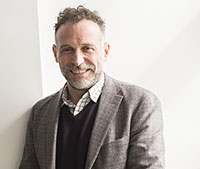
Dana Randall was born in New York City. She is the Director of the Algorithms and Randomness Center, ADVANCE Professor of Computing and Adjunct Professor at the School of Mathematics - Georgia Institute of Technology.
She obtained her A.B. in Mathematics at Harvard University (1988) and her Ph.D. in Computer Science at the University of California at Berkeley (1994). Her fields of interest are Theoretical Computer Science, Randomized Algorithms, Combinatorics, Stochastic Processes, Simulations of Physical Systems. The primary focus of her work is the design and analysis of efficient sampling algorithms based on Markov chains.
In 2012 she became a fellow of the American Mathematical Society and in 2007 was named a National Associate of the National Academies. She has served on the editorial boards of the Annals of Applied Probability, the SIAM Journal on Discrete Mathematics and the Theory of Computing. She chaired of the program committee for the ACM/SIAM Symposium on Discrete Algorithms in 2011 and will co-chair the SIAM Conference on Discrete Mathematics in Atlanta, June 2016. At Georgia Tech, she is currently co-directing the strategic initiative in data engineering and science.
Professor Nicolai Reshetikhin is a full professor at the Department of Mathematics at University of California, Berkeley. He is also a full professor at the Korteweg-de Vries Institute for Mathematics at the University of Amsterdam, and a member of the steering committee of the Centre for Quantum Geometry of Moduli Spaces at Aarhus University. After receiving his PhD from Leningrad University in 1984, Reshetikin held positions at Steklov Mathematical Institute and at Harvard University, before moving to the University of Berkeley in 1991. His groundbreaking research lies at the nexus of several branches of mathematics and mathematical physics, including quantum field theory, low-dimensional topology, and statistical mechanics. He was one of two founding editors of the European Mathematical Society journal Quantum Topology.
Reshetikhin is a Fellow of the Danish Royal Academy of Sciences and Letters and a 2015 Simons Fellow in Mathematics. Other recognitions of Reshetikhin's fundamental contributions to mathematical research include a Sloan Fellowship, a Humboldt Research Award, a Niels Bohr Visiting Professorship, a plenary lecture at the 1994 International Congress of Mathematical Physics, two invited lectures at the International Congress of Mathematicians (a sectional lecture in 1990, and a plenary lecture in 2010), and a plenary lecture at the 2008 European Congress of Mathematicians.
Emmanuel Ullmo has been at the helm of the Institut des hautes études scientifiques (IHÉS) since September 1, 2013. A former student of the École Normale Supérieure de Cachan (class of 1985), he obtained his PhD in Mathematics from the Université Paris-Sud (1992). His research area is algebraic geometry and arithmetic.
He has held a variety of positions in France and abroad. He spent a year and a half at the IMPA in Brazil, two years at Princeton University and six months at Tsing-Hua University in the People's Republic of China.
Faculty at the Université Paris-Sud since 2001, he took leadership of the Département de Mathématiques d'Orsay and the head of the hiring committee between 2007 and 2010.
Member of the scientific committee of the Centre Emile Borel (Institut Henri Poincaré) from 2002 to 2006, he has also joined the editorial board of the Inventiones Mathematicae journal in 2006 , and has been one of two chief editors between 2008 and 2013.
He was an invited speaker at the International Congress of Mathematicians in Beijing in 2002 and member of the Institut Universitaire de France from 2003 to 2008. In 2006, he received the Elie Cartan Prize of the Académie des Sciences de Paris.
Michael Jeffrey Ward
Michael Ward obtained his Ph.D in Applied Mathematics at Caltech in
1988, having received his B.Sc degree at the University of British
Columbia in 1983. After a postdoc at Stanford and the Courant
Institute, he returned to UBC in 1993, where he is currently Professor
of Mathematics, and a former director of the Institute for Applied
Mathematics at UBC. His primary area of interest is in asymptotic and
singular perturbation analysis for PDEs and the study of the dynamics
and stability of spatio-temporal patterns for reaction-diffusion
systems, modeling diverse areas such as chemical instabilities,
biological morphogenesis, cell signalling and quorum-sensing, and
hotspot patterns of urban crime.
His work in strong localized
perturbation theory has been central to the analysis of various mean
first passage time problems in cell signalling with localized
traps. He was a co-winner of the Andre-Aisenstadt CRM prize in 1995,
the Coxeter James CMS prize in 1998, was awarded a Steacie Fellowship
in 1998, was an invited speaker at ICIAM in Hamburg in 1995. In 2011
he was honoured with the CAIMS Senior Research Prize. He is the
co-editor-in-chief of the European Journal of Applied Mathematics, and
serves on the editorial boards of Nonlinearity, the Journal of
Nonlinear Science, and DCDS-B.










 Dusa McDuff
 Afonso S. Bandeira
 Lia Bronsard is one of Canada's leading mathematical analysts, whose interests lie in the field of partial differential equations and the calculus of variations. She specializes in the study of singular limits of solutions of partial differential equations. Her research brings rigorous methods of analysis to bear on problems arising in the physical sciences, and in particular those involving singular geometrical structures such as vortices, phase transition layers, and grain boundaries.
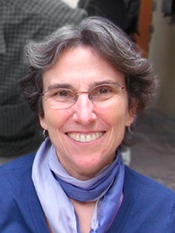 Ruth Charney
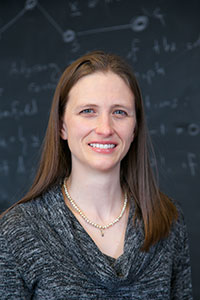 Miranda Holmes-Cerfon
 Octav Cornea
 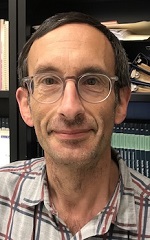 Olivier Lafitte
 Javad Mashreghi
 Sylvie Méléard
 Robert Pego has been a professor at Carnegie Mellon since 2004. He received his A.B. in mathematics from the University of Chicago and obtained his Ph.D. in applied mathematics from the University of California at Berkeley. He was a postdoctoral research associate at the University of Wisconsin, and became assistant professor at the University of Michigan before being a professor at the University of Maryland for 14 years.
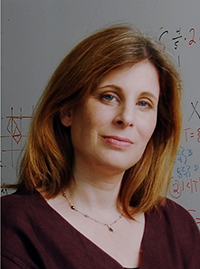 Dana Randall was born in New York City. She is the Director of the Algorithms and Randomness Center, ADVANCE Professor of Computing and Adjunct Professor at the School of Mathematics - Georgia Institute of Technology.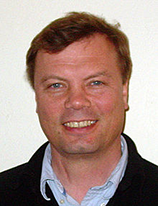
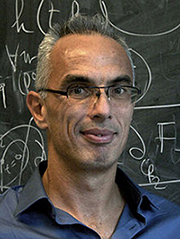
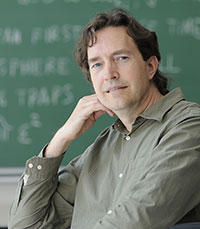 Michael Jeffrey Ward